
A parliamentary committee has pulled up the finance ministry for not adhering to Fiscal Responsibility and Budget Management Act in cutting revenue deficit by 0.5 per cent of GDP for 2005-06 saying there should not be deviations every now and then.
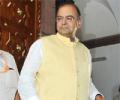
Budget 2014 is a strong first step to slowly re-architecting and reviving our economy and transform India, says Rajeev Chandrasekhar.

This is not an election Budget in the sense that I might target the voter in the coming elections. But if you look beyond this round of state elections, and tilt the periscope to graze at the more distant horizon, see how the Narendra Modi government wishes things looking by the summer of 2024, observes Shekhar Gupta.
Unveiling far reaching fiscal reforms to improve tax mop up and wipe out revenue deficit by 2009, the Kelkar panel on Friday proposed a single countrywide goods and services tax, removal of tax exemptions and raising income tax slab to Rs 100,000.

India's fiscal deficit trends are a bit like an alcoholic trying, unsuccessfully, to reform. Virtue does not last for too long, says Shankar Acharya.

RBI's latest rate cut will bring down home, car loan's EMI.

'I found it unbelievable that L&T said 45,000 jobs were waiting to be filled because of unavailability of suitable skillsets.' 'So, when the Opposition sweepingly says there are no jobs, I'm sorry... I'm not saying it's raining jobs, but there are jobs. The (skill) gap has to be bridged.'

FinCom prescribes scrapping of effective revenue deficit.

In 2012-13, the Centre managed to cut fiscal deficit to 4.9% of GDP, lower than the Budget revised estimates of 5.2%
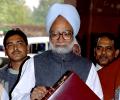
'We are going to need more technical people in government.' 'You can't expect a generalist to understand the complicated world of financial engineering.' 'I regret to say that most of our politicians have no competence to deal with these things. Nor is there a willingness to learn.'

The Budget has to provide for capex on roads, railways, defence and other infrastructure sectors.

'If some measures are implemented quickly, they can help revive growth.'

We should work in unison to boost growth: FM

Why did the political system in the country react to these two decisions of the Modi government in a diametrically opposite manner? asks A K Bhattacharya.

'It has been an ongoing process, talking to the relevant ministries about eliminating leakages and curbing non-core expenditure in various schemes.'

Finance minister tries to put house in order before reforms are unveiled in February.

Senior bureaucrats say the government has planned a 'feel-good' Budget after the 'pain' of demonetisation.
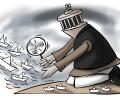
Chief Economic Advisor Krishnamurthy Subramanian said China imports a lot of components, parts, assembles and integrates and then exports them.
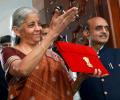
The real requirement for the finance minister's explanatory speech is to explain the measures taken in the Budget to influence inflation and growth not just through the announcement of a deficit goal, but more broadly through the impact on money supply, consumer demand, foreign trade and investment, explains Nitin Desai.
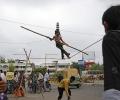
Economic growth depends a lot on what FM announces in the upcoming Union Budget.

They pointed out that Finance Minister Nirmala Sitharaman relies a lot on divestments, where the government under-performed in FY2019-20, to achieve the 3.8 per cent fiscal deficit target.
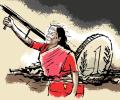
Finance Minister Nirmala Sitharaman will present the much-awaited 2022-23 Union Budget on February 1. While there has been strong recovery in some sectors, touch services like hospitality, tourism and leisure continue to suffer after two Covid-19 waves. Household savings have been hit due to increased spending on health care. Consumption has still not reached pre-pandemic levels.

India's rank in the World Bank's ease of doing business index cannot get better unless more attention is paid to bringing about procedural reforms in the way states run their governments and provide various approvals for trade and industry, says A K Bhattacharya.

The government on Friday sought Parliament's nod for an additional Rs 54,000-crore spending mainly to meet its obligation towards GST compensation to states and defence-related expenditure. Minister of State for Finance Anurag Thakur presented the second and final batch of supplementary demands for grants in the Lok Sabha.
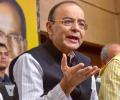
However, independent economists are not as gung-ho as the finance ministry over the likelihood of deficit target being met this time around, says Indivjal Dhasmana.
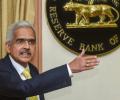
Expressing his satisfaction over the government's move to slash fiscal deficit target, Das said it will help improve investment by the private sector as crowding out impact will be less.

If the Centre and states are keen on spending more to meet the COVID-19 challenges in the coming year, they must bear in mind the need to raise more resources through taxes and non-tax revenues, suggests A K Bhattacharya.

Among other things, the agenda is likely to focus on increasing private investment, employment generation and giving relief to the farm sector

He did not believe in any fiscal puritanism. In 2012, when it was almost certain that the government will breach the 2012-13 fiscal deficit target, he wrote that in abnormal times, abnormal measures are required to get back to normalcy.

In fact, no other recent Union Budget has held so much significance for the Indian economy as the one to be presented in about six weeks from now, notes A K Bhattacharya.

An interview with Amit Mitra, the finance minister of West Bengal.

China on Friday hiked its defence budget to $209 billion, maintaining a single-digit growth for the sixth consecutive year with a 6.8 per cent increase in 2021.

The Budget decides to take the lead in revving up infrastructure.

Amid a debate on the freebies, the Election Commission on Tuesday proposed amending the model code to ask political parties to provide authentic information to voters on the financial viability of their poll promises.

Credit rating agencies have been raising red flag over high debt to GDP ratio of India.
